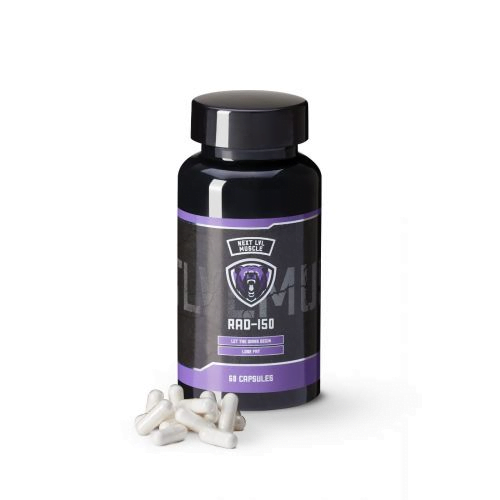
RAD-150 Capsules
€ 44,95
RAD-150 capsules contain a formulated presentation of RAD-150, a benzoate ester research compound structurally related to RAD-140, offered by Raw Lab Chems with seller-specified ≥98% purity. The material is intended exclusively for controlled in-vitro, chemical, forensic, and analytical research.
For research use only. Not for human or veterinary use. Not for clinical, diagnostic, or consumptive applications.
RAD-150 Capsules
Product Overview
RAD-150 capsules provide a formulated presentation of RAD-150, a synthetic research compound described in the supplied information as a non-steroidal selective androgen receptor modulator (SARM) and benzoate ester analogue related to RAD-140. The material is positioned as an analytical reference for controlled chemical, structural, and comparative laboratory investigation.
Raw Lab Chems presents the material exclusively for laboratory and analytical research. The supplied specification states ≥98% purity for a typical batch. Although the source describes this value as third-party verified, no corresponding Certificate of Analysis or independent analytical report accompanied the supplied information. The purity value is therefore treated as seller-provided information rather than independently verified analytical evidence.
The source discusses receptor-binding interactions, tissue-selective androgen-receptor research, structure-activity relationships, forensic analysis, and chromatographic detection. These subjects establish scientific research context only and are not presented as therapeutic, muscle-building, hormonal, athletic-performance, or other personal-use benefits.
Chemical Identity & Classification
The supplied systematic chemical name is (1R,2S)-1-((3-chloro-4-cyano-2-methylphenyl)amino)-1-(5-(4-cyanophenyl)-1,3,4-oxadiazol-2-yl)propan-2-yl benzoate.
The source provides CAS 1208070-53-4, molecular formula C27H20ClN5O3, and molecular weight 497.93 g/mol. RAD-150 is described as a benzoate ester derivative structurally related to RAD-140 and as belonging to an arylpropionamide-derived SARM research class.
The systematic name includes defined (1R,2S) stereochemistry. These stereochemical identifiers should be preserved in identity-sensitive laboratory documentation rather than assuming that unspecified stereochemical forms are chemically or analytically equivalent.
The supplied chemical identifiers are reproduced as provided. They have not been silently corrected or reconciled against external databases or documentation.
Researchers may consult PubChem when reviewing publicly available chemical-reference information. Any database record used for analytical work should be checked against the exact identity, stereochemistry, and chemical form documented for the research sample.
Chemical & Physical Characteristics
The supplied material is described as a capsule formulation intended for laboratory handling and measurement. No verified capsule color, shell composition, dimensions, fill appearance, excipient profile, particle-size distribution, or other detailed formulation characteristics were supplied.
The molecular formula C27H20ClN5O3 and molecular weight 497.93 g/mol refer to the underlying RAD-150 compound rather than the complete capsule formulation. Capsule-shell materials and any unspecified excipients would constitute additional components and should be considered separately during formulation-specific analytical work.
No quantitative solubility data, melting point, density, hygroscopicity, or other detailed physicochemical measurements were supplied. Such characteristics are therefore not inferred from RAD-140 or other related research compounds.
The source recommends storage in a cool, dry environment protected from light and identifies 2–8°C as the preferred range for optimal long-term stability. No supporting stability study, degradation profile, or validated shelf-life dataset was provided. This temperature range is therefore retained as source-provided storage guidance rather than independently validated stability data.
Purity & Analytical Verification
The supplied specification for RAD-150 capsules states ≥98% purity for a typical batch of the underlying research compound.
The source describes this purity specification as independently verified and states that third-party Certificates of Analysis are available upon request. HPLC, LC-MS, and NMR spectroscopy are also identified as analytical techniques relevant to characterization of the material.
No batch-specific Certificate of Analysis, HPLC chromatogram, mass spectrum, NMR spectrum, or independent laboratory report accompanied the supplied information. Consequently, the purity value and third-party verification statements are treated as seller-supplied claims rather than independently established results for a specific batch.
HPLC, LC-MS, NMR, and related instrumental techniques can support chemical characterization when appropriately validated for the intended analytical objective. Depending on methodology, such techniques may provide information concerning identity, purity, impurity profiles, structural characteristics, and differentiation from related compounds.
Because this is a formulated research material, chemical purity and formulation uniformity are separate analytical characteristics. A stated purity value for RAD-150 itself does not independently establish the composition or uniform distribution of the complete capsule formulation.
Quality Control & Batch Integrity
Reliable analytical research requires documentation connecting experimental observations to the exact material examined. Useful laboratory records can include chemical identity, stereochemical designation, formulation type, supplier, lot or batch identifier, receipt date, storage history, analytical documentation, and chain-of-custody information where appropriate.
The supplied source describes batch-specific tracking, documentation for traceability, independent laboratory verification of identity and purity, third-party Certificate of Analysis availability, and production under ISO-compliant conditions.
No supporting ISO certification, quality-system documentation, Certificate of Analysis, batch record, independent laboratory report, or formulation-uniformity study was supplied. These statements therefore remain source-provided quality claims rather than independently established certifications or guarantees.
Researchers conducting comparative, forensic, or longitudinal analytical studies should ensure that observations can be linked to the precise research material examined. Differences in lots, formulations, storage history, reference standards, or analytical methods may introduce variables relevant to interpretation.
No additional third-party certification or lot-to-lot reproducibility guarantee is made without supporting documentation.
Safety, Handling & Laboratory Precautions
RAD-150 should be handled exclusively by appropriately trained personnel in a controlled laboratory environment. Suitable personal protective equipment, ventilation, containment, access restrictions, and waste-management procedures should be established through institutional risk assessment and applicable safety documentation.
The compound’s experimental association with androgen-receptor research should be considered when laboratories establish suitable controls. Activity observed in biochemical or cellular research does not establish safety or suitability for human or veterinary exposure.
Researchers should consult an applicable Safety Data Sheet for the exact compound and formulation when establishing procedures concerning accidental exposure, spills, contamination control, environmental release, waste collection, and disposal.
The research material should remain secured against unauthorized access and separated from food, beverages, children, pets, and non-research environments. Laboratory procedures should also minimize unintended contamination of analytical equipment, work surfaces, samples, and waste streams.
Packaging, Labeling & Storage
The supplied source states that the material is securely packaged with labeling appropriate for chemical research materials. No packaging specification, container-closure validation, transport study, or supporting technical documentation was provided to independently establish these characteristics.
The supplied storage recommendation specifies a cool, dry environment protected from light, with 2–8°C identified as the preferred range for long-term stability. This recommendation is retained as source-provided guidance rather than represented as independently validated Raw Lab Chems stability data.
Researchers should follow documentation applicable to the specific batch, relevant SDS guidance, and institutional chemical-storage requirements.
Because the material is supplied as a capsule formulation, laboratory records should distinguish the complete formulation from isolated RAD-150 reference material. Labels should preserve the RAD-150 identifier, relevant stereochemistry, and lot or batch information where available. Storage history should also be documented where environmental variables could influence subsequent analytical observations.
Intended Research Use & Market Positioning
RAD-150 is positioned for controlled laboratory investigation involving chemical characterization, analytical reference work, comparative SARM chemistry, structure-activity relationships, androgen-receptor research, chromatographic detection, and analytical method development.
The supplied source specifically identifies HPLC, LC-MS, and NMR spectroscopy as relevant techniques. It also describes forensic analysis, pharmaceutical impurity profiling, detection in complex matrices, and academic investigation of SARM analogues as potential research contexts.
The described structural relationship between RAD-150 and RAD-140 can also provide a basis for comparative chemical research involving ester derivatives and related analytical behavior. This relationship does not establish equivalent properties or analytical interchangeability between the two compounds.
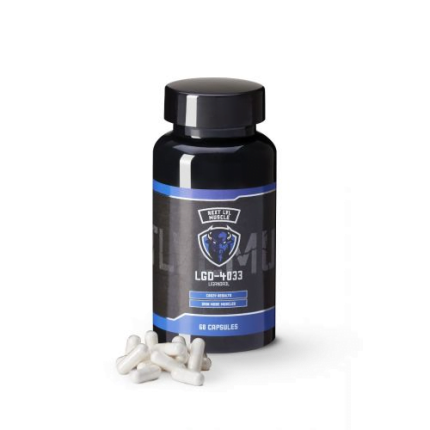
Researchers examining other SARM-class materials can separately review Raw Lab Chems LGD-4033 Powder (Ligandrol) and LGD-4033 Ligandrol Capsules. These are distinct research materials and should not be treated as chemically interchangeable with RAD-150.
The Raw Lab Chems RAD-150 Capsules research listing provides the catalog reference for the formulation described here.
No medical, therapeutic, diagnostic, veterinary, hormonal, bodybuilding, muscle-building, athletic-performance, or consumptive application is represented by this description.
Ordering, Availability & Fulfillment
Institutional procurement of RAD-150 should begin with confirmation of the required chemical identity, stereochemical specification, formulation, analytical documentation, institutional authorization, and jurisdiction-specific requirements applicable to the proposed research.
The source describes worldwide shipping to qualified research institutions, secure packaging, chemical-research labeling, and shipment tracking. These logistics statements are not independently verified here, and no current fulfillment documentation was supplied.
No claims are therefore made concerning current inventory, package configurations, dispatch schedules, delivery times, shipping destinations, courier services, tracking availability, customs processing, geographic availability, or payment methods.
Researchers and institutions remain responsible for determining whether acquisition, possession, import, export, transfer, storage, and investigation of the material are permitted and appropriately authorized within their jurisdiction and institutional framework.
Legal & Regulatory Disclaimer
For research use only. Not for human or veterinary use. Not for clinical, diagnostic, or consumptive applications.
RAD-150 is presented as an experimental laboratory research compound. Regulatory treatment may differ according to jurisdiction, intended research activity, institutional policy, and applicable medicines, sporting, chemical-control, forensic, or research frameworks.
Researchers and institutions are responsible for determining and complying with applicable requirements governing acquisition, possession, licensing, import, export, transfer, storage, security, research, environmental handling, and disposal.
A research-use designation does not establish universal legality, medical approval, suitability as a dietary supplement, or exemption from anti-doping, medicines, chemical-control, institutional, or other applicable requirements.
You must be logged in to post a review.
Related products
Reviews
There are no reviews yet.