
Dutch TUSI
€ 14,95
Dutch TUSI is presented by Raw Lab Chems as a multi-component research material with a seller-specified ≥98% purity claim. Because it is identified as a mixture rather than a single defined compound, its individual constituents should be considered separately during laboratory characterization.
For research use only. Not for human or veterinary use. Not for clinical, diagnostic, or consumptive applications.
Dutch TUSI
Product Overview
Dutch TUSI is presented by Raw Lab Chems as a generic, brandless multi-component material intended exclusively for laboratory and analytical research. Unlike a single chemically defined compound, the supplied information describes Dutch TUSI as a mixture containing several listed ingredients.
The supplied ingredient list is DM-DED, 3-M-PCPY, E170, E122, and E172. No proportions or quantitative composition were provided for these constituents. Researchers should therefore treat Dutch TUSI as a mixture whose overall identity cannot appropriately be represented by a single molecular formula, molecular weight, or CAS number.
The term TUSI can be used inconsistently in different contexts and should not itself be regarded as establishing chemical composition. Laboratory characterization should instead focus on the actual constituents present in the particular material being examined.
Raw Lab Chems provides a Dutch TUSI research reference for this material. Its presentation here is limited to chemical identification, analytical context, laboratory handling, and related research considerations.
Chemical Identity & Classification
Dutch TUSI is identified by the supplied information as a mixture rather than an individual molecular substance. Consequently, no single CAS number, molecular formula, or molecular mass has been supplied for the complete material.
The listed ingredients are DM-DED, 3-M-PCPY, E170, E122, and E172. Because no verified proportions were provided, this ingredient list does not establish the quantitative composition of the mixture.
E-number designations describe particular substances or classes used in other contexts, but their presence in an ingredient list does not establish the chemical identity, grade, concentration, or analytical characteristics of the complete mixture. Similarly, abbreviated research-chemical names should be resolved to unambiguous chemical identities before analytical data are assigned to them.
Researchers may consult PubChem when investigating individual chemical constituents. Each database record should be matched carefully to the exact constituent rather than attempting to assign a single database identity to Dutch TUSI as a whole.
Chemical & Physical Characteristics
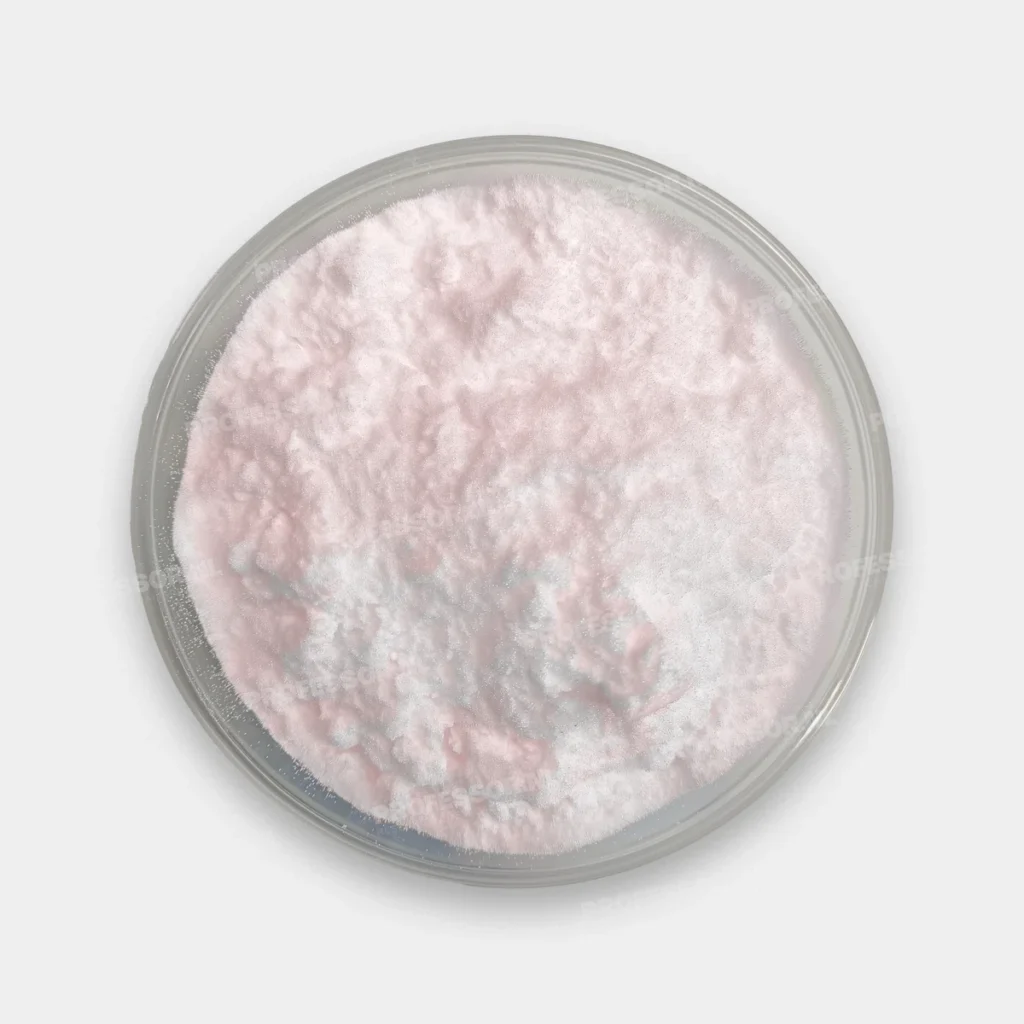
No verified physical form, color, appearance, solubility, particle characteristics, or other physical properties were supplied for the specific Raw Lab Chems material. These characteristics are therefore not inferred.
This distinction is particularly important for mixtures. Physical appearance cannot establish the identity or concentration of individual constituents, and visually similar materials can differ significantly in composition.
The supplied source states that Dutch TUSI may retain stability for up to two years when stored in the correct environment. However, no defined temperature, humidity, light exposure, atmosphere, or supporting stability documentation was provided.
A specific two-year shelf life therefore cannot be established from the supplied information alone. Researchers should rely on documentation applicable to the actual material and account for the possibility that individual mixture constituents may have different stability characteristics.
Purity & Analytical Verification
The source information gives Dutch TUSI a >98% purity value. Raw Lab Chems can describe this as a seller-provided ≥98% specification, but the meaning of a single purity percentage for a multi-component mixture requires particular care.
For a defined pure compound, purity ordinarily refers to the proportion of the specified chemical relative to impurities. Dutch TUSI is instead described as containing multiple intentionally listed constituents. Without documentation defining what the stated percentage measures, it should not be interpreted as establishing the concentration or purity of each individual component.
Laboratory investigation of mixtures can employ chromatographic, spectroscopic, mass-spectrometric, or other analytical approaches according to the research objective and validated methodology. Different techniques may be necessary to distinguish and characterize individual constituents.
No product-specific HPLC, GC, NMR, LC-MS, GC-MS, or comparable analytical results were supplied. Mentioning these general analytical approaches does not imply that Raw Lab Chems used them to test this particular material.
Quality Control & Batch Integrity
Mixture composition makes material identification and batch documentation especially important. Researchers may need to establish both which constituents are present and their relative proportions when those characteristics are relevant to an analytical project.
Lot identifiers, compositional records, analytical documentation, storage history, and traceability information can help laboratories associate research observations with a particular material.
No confirmed information was supplied regarding Raw Lab Chems lot numbering, batch traceability, manufacturing controls, third-party testing, or batch-specific compositional verification for Dutch TUSI. These features are therefore not claimed.
Researchers requiring defined mixture composition should rely on suitable documentation or analytical characterization rather than assuming that different materials carrying the same informal name necessarily have identical compositions.
Safety, Handling & Laboratory Precautions
Dutch TUSI should be handled as a multi-component laboratory material by appropriately trained personnel in a controlled research environment. Appropriate PPE and containment measures should be determined through an institutional risk assessment and applicable safety documentation.
The supplied information identifies possible respiratory and eye irritation and advises against uncontrolled environmental discharge. These statements do not establish a comprehensive hazard classification for either the complete mixture or its individual constituents.
Mixtures can require additional consideration because the hazards of individual components and their concentrations may affect the overall safety assessment. Researchers should consult applicable SDS information for the material and, where appropriate, information relevant to identified constituents.
Access should be restricted appropriately. The material should be kept away from children, pets, food, beverages, and unauthorized personnel, while waste should be managed according to applicable laboratory and regulatory procedures.
Packaging, Labeling & Storage
No verified packaging material, container type, seal configuration, labeling specification, or other packaging information was supplied for Dutch TUSI. No specialized packaging claims are therefore made.
No sufficiently specific storage conditions were provided to establish a validated temperature range or environmental requirement. Laboratories should follow information on the applicable product label or SDS and their institutional procedures for storing research chemicals.
Because Dutch TUSI is described as a mixture, storage considerations may depend on the characteristics of multiple constituents. A storage condition suitable for one component should not automatically be assumed to establish stability for the complete material.
Where stability is important to analytical work, researchers should document storage history and use appropriate material-control procedures.
Intended Research Use & Market Positioning
Dutch TUSI is presented exclusively as a laboratory and analytical research material. Its multi-component character makes compositional identification and mixture characterization particularly relevant research considerations.
Potential analytical contexts can include qualitative chemical identification, separation-method development, mixture characterization, comparative analysis, and investigation of individual constituents where legally and institutionally permitted.
Researchers examining related catalog materials may encounter Raw Lab Chems references for 6-MAPB and BK-MAPB. These are separate materials and should not be treated as constituents of Dutch TUSI unless supported by specific compositional evidence.
Neither the TUSI name nor its listed composition establishes suitability for medical, therapeutic, diagnostic, veterinary, recreational, cosmetic, or consumptive applications. No biological outcome or application is represented by this research description.
Ordering, Availability & Fulfillment
Laboratory procurement of a mixture such as Dutch TUSI should include consideration of constituent identity, available compositional documentation, institutional requirements, and applicable jurisdictional restrictions.
No confirmed Raw Lab Chems information was supplied concerning current inventory, delivery times, shipping destinations, tracking services, payment features, specialized packaging, or other fulfillment characteristics. These features are therefore not claimed.
The supplied source statement concerning shipment within 24 hours originated from separate vendor material and is not presented as a Raw Lab Chems fulfillment commitment.
Researchers should independently establish whether acquisition, possession, import, storage, and investigation of the complete mixture and its individual constituents are permitted under applicable institutional and jurisdictional requirements.
Legal & Regulatory Disclaimer
For research use only. Not for human or veterinary use. Not for clinical, diagnostic, or consumptive applications.
Regulatory treatment of Dutch TUSI cannot be established solely from its informal product name. For a multi-component material, applicable requirements may depend on the identity and regulatory status of individual constituents as well as the jurisdiction involved.
Researchers and institutions are responsible for confirming and complying with requirements governing purchase, possession, import, export, transfer, storage, security, research, and disposal of the material and its constituents.
A research-use designation does not override controlled-substance legislation, analogue provisions, novel-substance regulations, licensing requirements, import restrictions, or institutional policies that may apply.
You must be logged in to post a review.
Related products
7-ABF
Price range: € 32,00 through € 770,00

Reviews
There are no reviews yet.